Sewer Reticulation Hamilton
Gravity sewer mains, manholes and laterals laid to precise grade.
07 8087 881Wastewater & Sewer Reticulation in Hamilton
Reliable wastewater infrastructure is a fundamental requirement for any residential subdivision, ensuring proper sewage collection and connection to council systems. Our wastewater and sewer reticulation services in Hamilton cover pipe laying, manhole construction and connection works, all completed to engineering and council compliance standards.
We carefully manage pipe gradients and depths to ensure proper flow and long-term system reliability, minimizing the risk of blockages or maintenance issues after completion. As a critical component of subdivision infrastructure, sewer reticulation work requires precision and strict adherence to specifications. Our experienced team ensures every stage of installation meets required standards, helping projects move smoothly through council inspection and sign-off.
Free estimate
Wastewater and Sewer Services in Hamilton
Wastewater networks rely on gravity, so every metre of pipe must sit at the right level. We set out from survey control, laser-grade each run and check inverts at every manhole. From deep trunk sewers to individual lot laterals, the work is carried out to approved drawings, tested before backfill is finished and recorded for council acceptance.
Gravity Sewer Mains
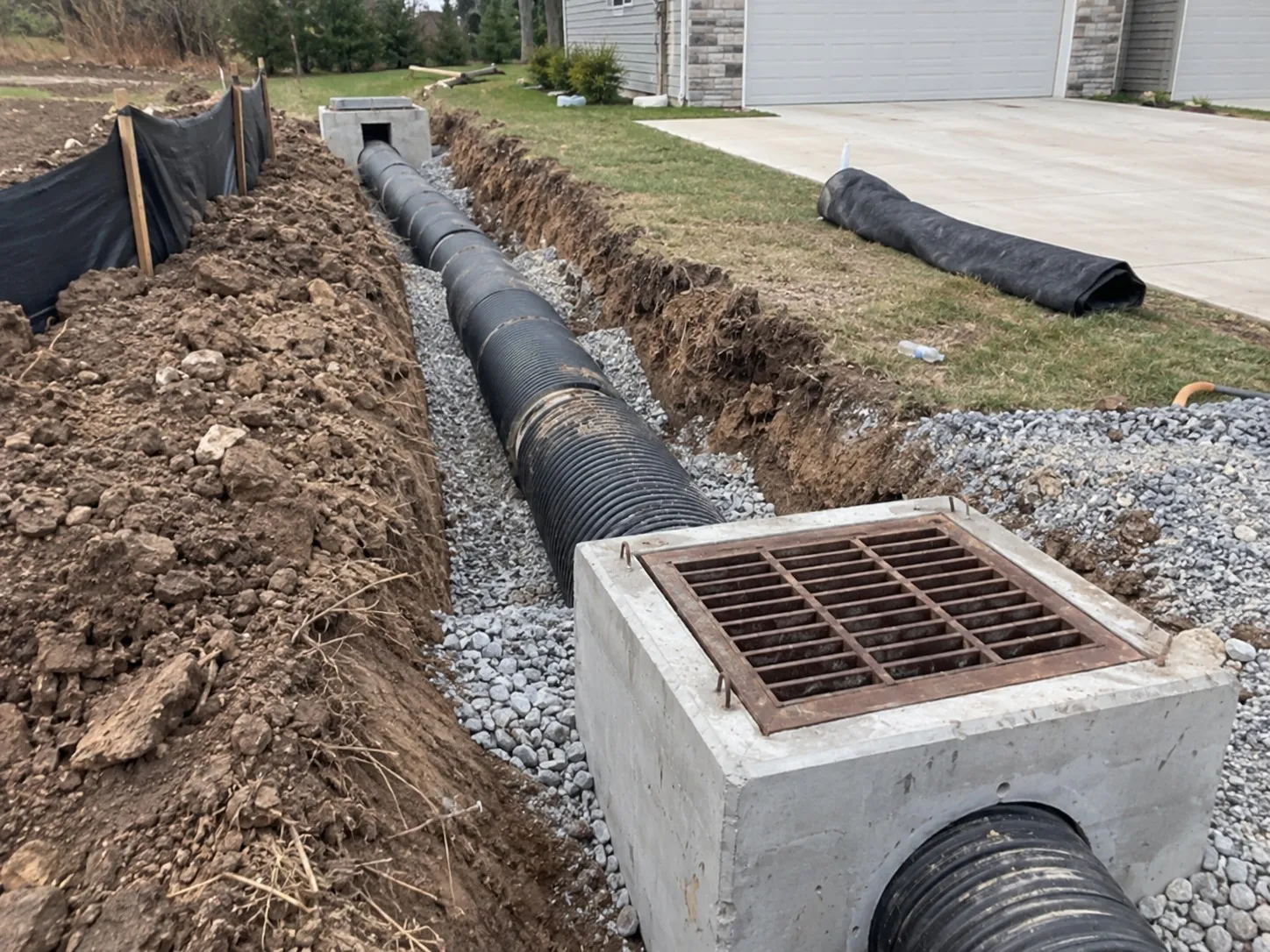
We lay PVC and polyethylene gravity sewer mains between manholes using laser grading to hold consistent falls. Pipes are bedded and surrounded in approved granular material, then backfilled in compacted layers so the line stays true and joints remain watertight under road pavements and building loads.
Manhole Construction
Precast manholes are installed on firm foundations with formed benching and channels that guide flows smoothly through each chamber. We set drop connections where levels demand it, seal every joint and finish lids to the final surface, whether that is road seal, footpath or grassed berm.
Lot Laterals And Junctions
Every lot receives a wastewater lateral taken from a junction on the main and brought to the boundary at a depth that suits the future house drainage. Laterals are capped, marked and surveyed so builders and drainlayers can connect easily once houses are under construction.
Deep Sewer Excavation
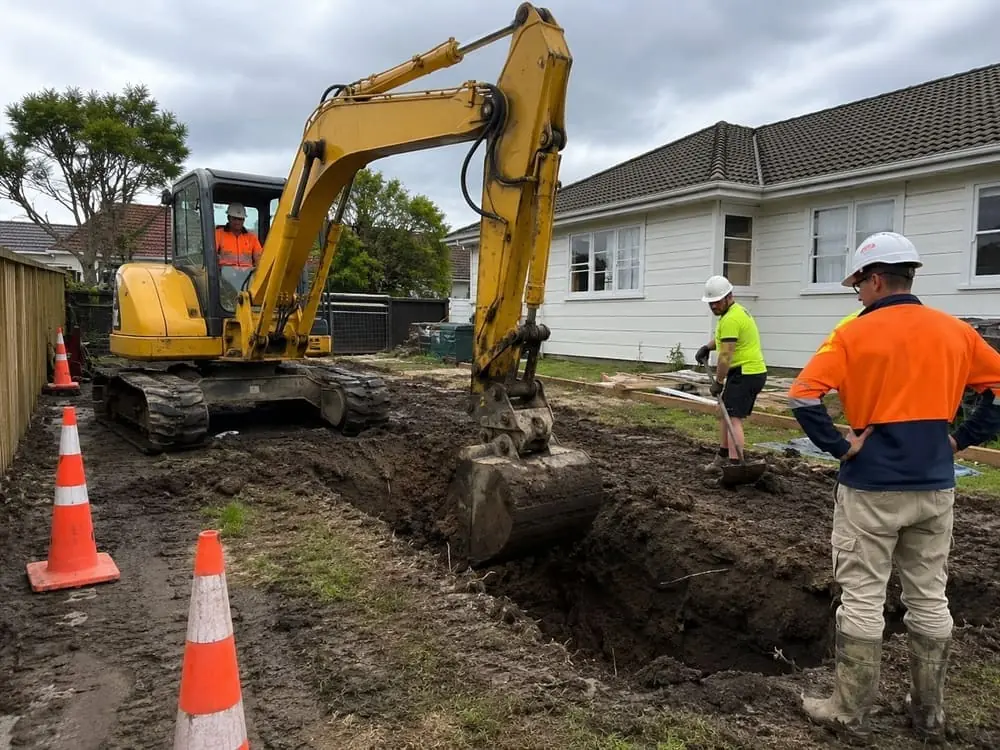
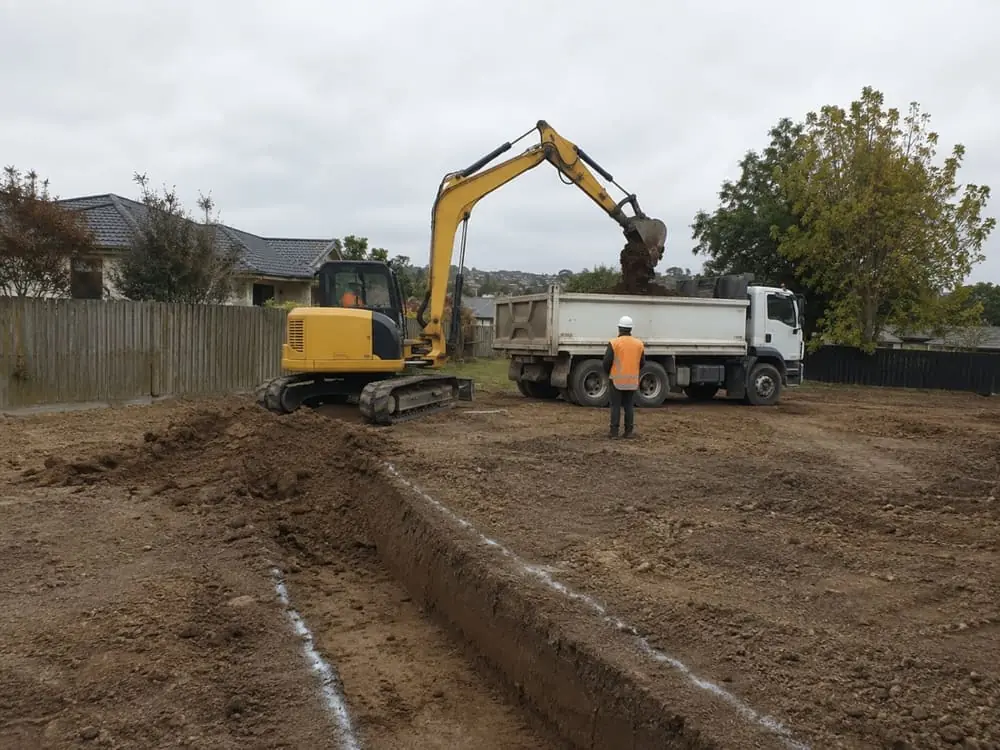
Flat Hamilton terrain can push sewers several metres deep to maintain fall. We use trench shields and shoring systems sized for the depth, bench or batter where space allows and keep open trench lengths short, protecting workers and neighbouring ground from collapse or movement.
Dewatering In Wet Ground
High groundwater and soft peat are common in low-lying parts of the Waikato. Where trenches fill with water, we use sump pumping or well-point dewatering, stabilise the trench base with granular material and manage discharged water so sediment is not released into streams or the stormwater system.
Rising Mains And Pump Station Works
Where a development cannot drain by gravity alone, a pump station and rising main may be required. We carry out the excavation, pipe laying and civil works for these systems, working alongside the specialist pump supplier and electrical contractor to build them to the approved design.
Connections To Live Sewers
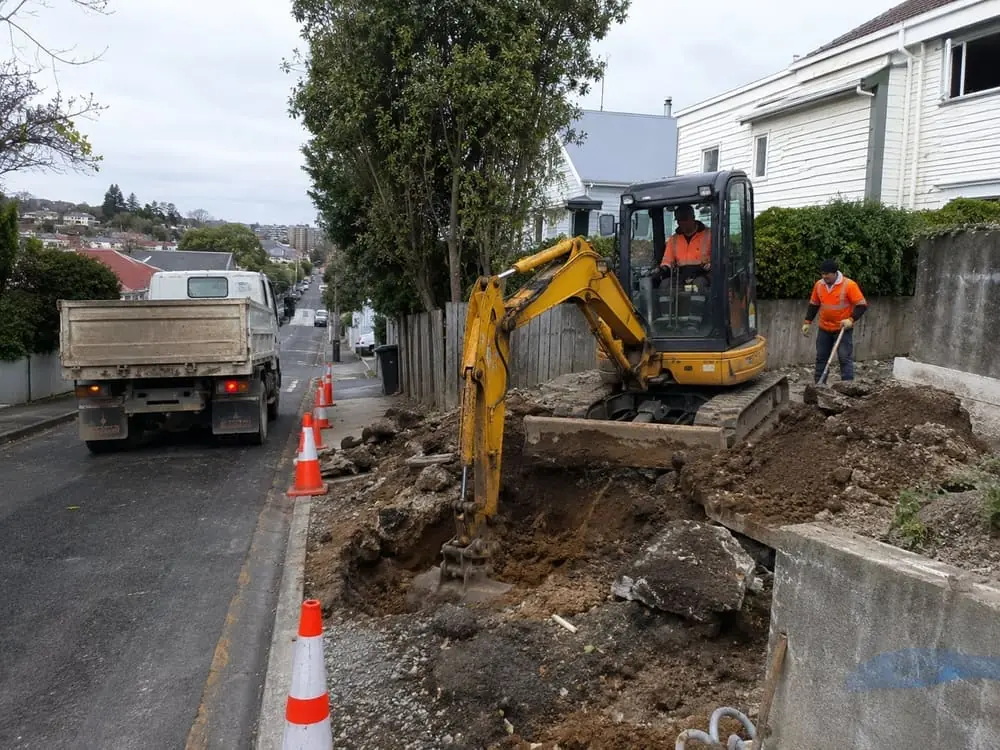
Tying new reticulation into an existing council sewer needs careful planning to avoid spills and service disruption. We coordinate the timing and method with council, arrange temporary flow management where required and complete the connection quickly and cleanly under the required inspections.
Pressure Testing And CCTV
New sewer lines and manholes are typically air or water tested for leaks and then inspected by CCTV to confirm grade and joint condition. We schedule testing progressively, remedy any defects straight away and hand over test results and as-builts ready for council acceptance.
Why Developers Choose Us for Wastewater and Sewer Reticulation
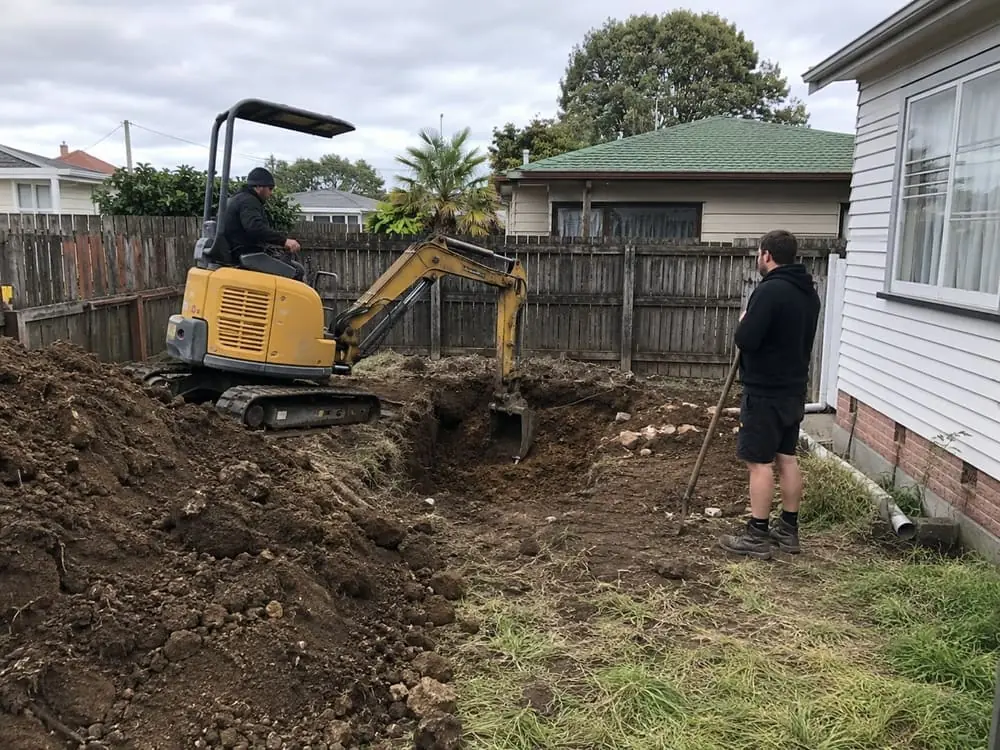
Sewer mains are often the deepest pipes on site, so they are best laid before shallower services crowd the corridor. With stormwater, water mains and ducting handled by the same crew, we sequence the deep work first and avoid digging back through freshly bedded pipes. The trench shields, pumps and excavators used for deep sewer work move straight on to the next network, and laterals are recorded with every other lot connection, ready for Section 224 checks on your Hamilton development.
- Civil Works
- Stormwater Drainage
- Wastewater & Sewer You are here
- Water Main Installation
- Underground Services
- Power & Telco Ducting
- Culvert Installation
- Section 224 Completion
Hamilton Sewer Reticulation Contractors: Our Scope
Gravity sewers depend on fall, so invert levels and the connection point to the existing council sewer are settled first.
Included in the scope
- Gravity mains laser-graded between manholes to hold consistent falls
- Precast manholes with formed benching, channels and sealed joints
- Lot laterals taken from junctions, capped and surveyed
- Air or water testing before backfill is finished
- Test results and as-builts prepared for council acceptance
Confirmed separately
- Temporary flow management for tie-ins to live sewers
- Well-point dewatering where groundwater fills the trench
- Trench shoring where sewer depth or ground calls for it
- Pump station supply and electrical work by specialists
- CCTV grade survey if run by a subcontractor