Drainage Excavation Hamilton
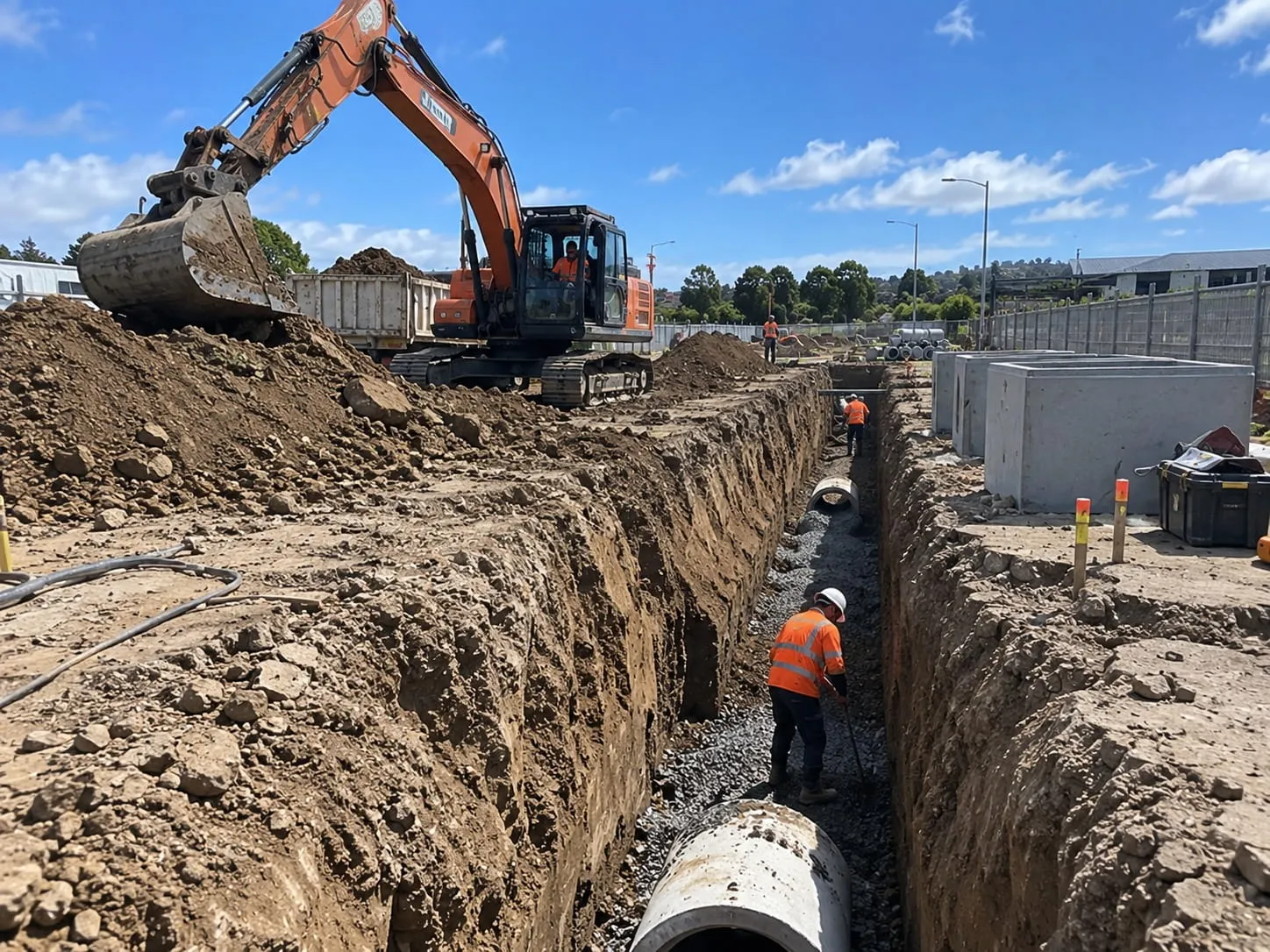
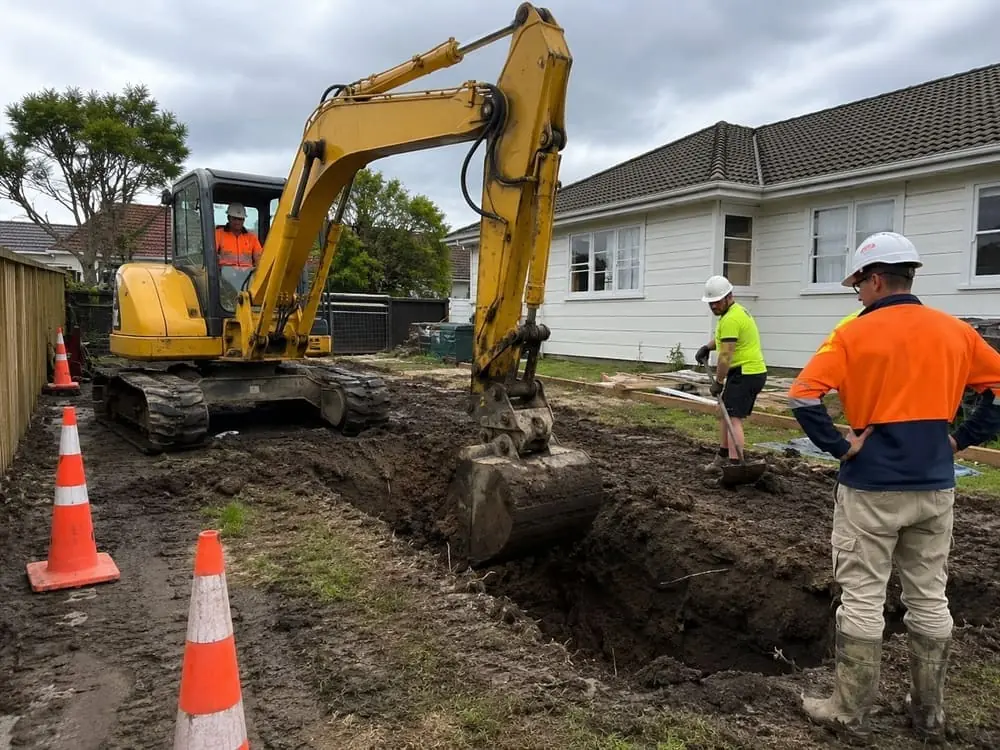
Stormwater, sewer and subsoil drainage trenches dug to grade and depth.
07 8087 881Drainage Excavation Contractors In Hamilton
Good drainage protects buildings, driveways and lawns from water damage, and it starts with trenches dug at the right depth and fall. Our drainage excavation services in Hamilton cover stormwater and sewer lines, soakholes, subsoil and French drains, and open swales on residential, rural and commercial sites. We work to your drainage plans and alongside your registered drainlayer, so pipes can be laid, inspected and backfilled efficiently with the correct grades maintained throughout.
Hamilton's mix of ash, clay and peat soils means drainage performance can vary a lot from one street to the next. We have dug drainage across the city and the wider Waikato, and we understand how to manage wet ground, trench stability and existing services. Alongside drainage work we provide foundation excavation, site preparation and retaining walls, so water management can be planned as part of the wider project rather than left as an afterthought.
Free estimate
Drainage Excavation Services in Hamilton
From a single soakhole for a new garage to full stormwater and sewer connections for a subdivision lot, we dig drainage accurately and safely. Services are located before we start, falls are checked with a laser level, and trenches are shored or battered where needed. Once pipes are laid and inspected, we backfill and compact to leave a tidy finish.
Stormwater Trenching
We excavate trenches for stormwater pipes from downpipes, driveways and hard surfaces to the council connection, soakage or detention tank. Each trench is dug to a consistent fall so water moves freely, reducing the risk of blockages, ponding and overflow onto neighbouring properties during heavy Waikato rain.
Sewer Connections
For new builds, extensions and relocated homes, we dig the trench for your wastewater line to the public connection point at the required depth. Working with your certifying drainlayer, we keep the excavation open only as long as needed for laying and inspection, then backfill promptly to keep the site safe.
Soakholes And Soakage
Where soils allow, soakholes and soakage trenches let stormwater drain back into the ground on site. We excavate to the size and depth set by your designer or soakage test, and install chambers or drainage aggregate as specified. Free-draining ash soils in some Hamilton suburbs often suit this approach well.
Subsoil And French Drains
Behind retaining walls, around foundations and across soggy lawns, subsoil and French drains collect groundwater before it causes problems. We dig the trench, lay filter cloth, drainage coil and clean aggregate, and connect to a suitable outlet, helping reduce damp, hydrostatic pressure and long-term damage to structures.
Swales And Open Drains
On rural blocks, lifestyle properties and larger sites, shaped swales and open drains move surface water safely across the land. We form them to the right profile and grade, stabilise the batters and can clear existing farm drains that have silted up, improving drainage and reducing surface flooding.
Backfill And Reinstatement
After pipes are laid and inspected, we backfill with suitable bedding and compacted material so the ground does not settle later. Lawns, paths and driveways are reinstated as agreed, and we can pour new concrete where trenches cross existing hard surfaces, leaving your property tidy when the job is done.
Detention And Rain Tanks
Many new builds and additions need on-site stormwater detention or rain tanks to manage runoff. We excavate for below-ground and partly buried tanks, prepare a firm bedding base and dig the inlet, outlet and overflow trenches, then backfill around the tank so it sits level and performs as designed.
Retaining Wall Drainage
Retaining walls without good drainage behind them can bow, lean or fail over time. We excavate behind new and existing walls to install perforated drain coil, free-draining aggregate and filter cloth, then connect the outlet to a suitable discharge point, relieving water pressure and extending the life of the wall.
Why Drainage Excavation Fits Best Within the Wider Groundworks
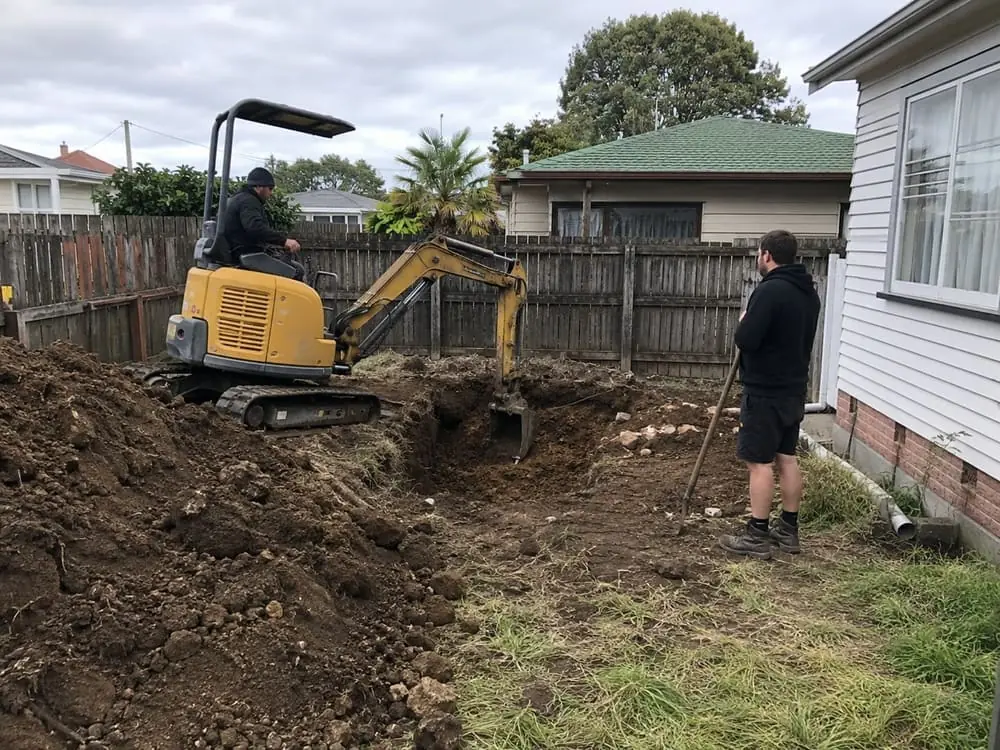
Drainage runs cross everything else on a site: foundations, driveways, access ways and retaining walls. When one contractor digs all of it, stormwater and sewer trenches can be opened before paths and driveways are formed, soakholes are placed clear of footings, and subsoil drains are coordinated with the earthworks rather than retrofitted. Your drainlayer works with a single crew that sets the programme, and backfill and reinstatement are finished by the team that will build over the top.
Hamilton Drainage Excavation Contractors: Our Scope
Drainage digging starts with locating existing services and confirming falls against the drainage plans, so pipes can run at the right grade.
Included in the scope
- Service plans checked and known lines exposed carefully
- Trenches dug to a consistent fall with a laser level
- Shoring or battering where trench depth or soil requires
- Trenches kept open only for laying and inspection
- Bedding placed and backfill compacted after pipes are passed
Confirmed separately
- Pipe laying and certification by your authorised drainlayer
- Soakage tests to confirm whether soakholes suit your soil
- Hamilton City Council approval for public network connections
- Concrete reinstatement where trenches cross existing hard surfaces
- Detention or rain tanks where the consent requires them